Dryer Duct Cleaning: What It Is, Why It Matters, and What to Expect

A dryer duct doesn’t get much attention until something goes wrong — clothes that won’t dry, a strange smell, or a dryer that’s hot to the touch. By then, lint has usually been building up inside the duct for a while, restricting airflow and, in some cases, creating a real fire risk.
Dryer duct cleaning is the process of clearing that buildup from the full duct system, not just the lint trap. This guide covers what it involves, why it matters, how to tell when your duct needs attention, and what to expect if you call in a professional.
What Is Dryer Duct Cleaning?
Every clothes dryer vents hot, moist air — carrying fine lint — through a duct (also called a dryer vent or dryer exhaust) that runs from the back of the machine to an outlet on the outside of the home. The lint trap inside the dryer catches some of this lint, but a portion always escapes into the duct itself.
Over time, that escaped lint collects along the interior walls of the duct, especially around bends, joints, and the exterior vent opening. Dryer duct cleaning is the process of removing that buildup from the entire duct run, not just the parts you can see or reach by hand. It’s a different task from emptying the lint trap, which only addresses what’s immediately inside the machine — a technician cleaning the full duct disconnects the dryer and works from both the interior and exterior ends of the system.
It’s also worth distinguishing this from the ductwork that heats and cools your home. If dust or airflow issues in your HVAC system are the concern rather than your dryer specifically, see our guide to residential duct cleaning instead.
Why Is Dryer Duct Cleaning Important?
A dryer duct’s job is to move hot, humid air out of the home efficiently. When lint restricts that path, three things tend to happen at once: the dryer takes longer to finish a load, it runs hotter than it should, and air that should be venting outside gets trapped inside the system.
Each of those has a consequence. Longer drying times mean more energy used per load. A dryer running hotter than normal wears out its components faster, which can lead to premature failure. And restricted airflow is the mechanism behind the fire risk covered below — lint is highly flammable, and heat that can’t escape has nowhere to go but back into the machine and duct.
Routine duct cleaning addresses the underlying cause rather than just the symptoms, restoring normal airflow so the dryer can run the way it was designed to.
How Dryer Ducts Become Clogged
Lint buildup is the primary cause, but a few conditions make it worse:
- Long or complex duct runs — the more bends and turns a duct has, the more surface area lint has to catch on.
- Heavy or frequent use — households running multiple loads a day, or businesses operating dryers at a much higher volume (see our commercial duct cleaning page for that context), generate more buildup between cleanings.
- External vent obstructions — the exterior vent hood can become blocked by debris or, in some cases, birds’ nests, which restricts airflow even if the duct itself is otherwise clear.
- Skipped maintenance — lint accumulates gradually, so ducts that haven’t been cleaned in a while naturally carry more buildup than those cleaned on a regular schedule.
None of these causes are unusual or a sign of a poorly installed system — they’re the normal result of how dryers work over time.
Signs Your Dryer Duct Needs Cleaning
A few warning signs tend to show up before a duct becomes a serious problem:
- Clothes take longer than usual to dry, or need more than one cycle to finish
- The dryer, or its exterior, feels unusually hot to the touch
- You notice a burning smell while it’s running
- Clothes come out with a musty smell despite a normal cycle
- Lint is visibly building up faster than normal in the trap
- The exterior vent hood flap doesn’t open and close freely, or lint is visible spilling out around it
Any one of these on its own is worth paying attention to. A burning smell in particular should be treated as urgent — see the section below.
How Often Should You Clean Your Dryer Duct?
There isn’t one schedule that fits every home. How often a dryer duct needs cleaning depends on several factors:
- How often the dryer is used — a household running loads daily needs more frequent attention than one doing laundry once a week.
- What’s being dried — towels, blankets, and sweaters shed more lint than lighter fabrics, so households drying a lot of these need cleaning sooner.
- How long each cycle runs — longer cycle times mean more lint passes through the system per load.
- Pets in the home — pet hair adds to the lint load beyond what clothing alone produces.
- The age and condition of the dryer — older units may not move air as efficiently, which can make buildup accumulate faster.
- How long it’s been since the last cleaning — if you’re not sure, that’s often a sign it’s overdue.
As a general starting point, many households find once a year reasonable, with more frequent cleaning for larger families, heavy dryer use, or homes with pets. The more reliable approach is to watch for the signs above rather than rely on the calendar alone.
Can a Clogged Dryer Duct Increase Fire Risk?
Yes, and the mechanism is straightforward: lint is highly flammable, and a blocked duct traps heat that would normally vent outside. As that heat concentrates instead of escaping, it raises the temperature around the lint buildup, increasing the chance of ignition. Because the affected section of ductwork is often inside a wall or otherwise hard to reach, a fire that starts there isn’t easy to catch early.
Gas dryers carry a second risk beyond fire: a blocked vent can allow combustion byproducts, including carbon monoxide, to build up inside the home rather than venting outside. Carbon monoxide is a health hazard on its own, separate from any fire risk.
Each year, thousands of home fires are linked to blocked dryer vents, according to the National Fire Protection Association. That doesn’t mean every clogged vent will cause a fire — most don’t — but the relationship between lint, restricted airflow, and heat buildup is well established, which is why fire prevention is one of the main reasons professional cleaning is recommended, alongside dryer performance and efficiency.
When Is Dryer Duct Cleaning an Urgent Need?
Most of the signs above call for scheduling a cleaning soon, not necessarily an emergency call. A few situations should be treated differently:
- If you smell burning while the dryer is running, turn it off, unplug it, and call a professional before using it again.
- If you suspect carbon monoxide is escaping from a gas dryer vent — unusual odours, headaches, or dizziness in the laundry area — treat it as an urgent safety issue rather than routine maintenance.
- If the dryer is overheating on every cycle, rather than occasionally, that’s a stronger signal of a significant blockage than an isolated warm cycle.
Everyday signs like slightly longer drying times or a gradual change in performance are worth scheduling a cleaning for, but they don’t call for the same immediate response as the situations above.
What Should You Expect During Professional Dryer Duct Cleaning?
While the exact process can vary by provider, professional dryer duct cleaning generally follows a logical sequence:
- Inspection — a technician identifies the location and severity of any blockage, checking both the interior duct run and the exterior vent.
- Disconnecting the dryer — the unit is unhooked from the duct to allow full access to the system rather than cleaning around it.
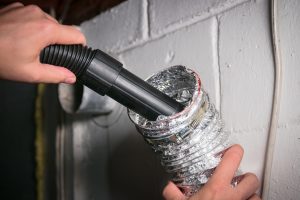
- Removing lint and debris — using vacuum equipment along with brush- or snake-style tools, the technician dislodges and removes lint from the duct’s interior walls, including buildup around bends and other hard-to-reach sections.
- Clearing the exterior vent — the outside vent opening and hood are checked and cleared, since blockages here restrict airflow just as much as buildup inside the duct.
- Diagnostic checks — depending on the provider, this can include confirming airflow through the vent, and for gas dryers, checking for signs of gas leakage or duct damage.
- Reconnecting and testing — the dryer is reconnected and run through a short cycle to confirm the blockage has cleared and airflow is restored.
This is a more thorough process than a lint trap or a short at-home brush can accomplish, which is part of why full duct cleaning is generally treated as a professional service. For details on scheduling, pricing, and what’s included with a specific provider, see our dryer vent and duct cleaning service page. For a broader look at what drives duct cleaning costs generally, see How Much Does Air Duct Cleaning Cost? A Breakdown of Key Factors.
Benefits of Professional Dryer Duct Cleaning
Pulling together the outcomes covered above, the main benefits of professional cleaning are:
- Restored airflow, letting the dryer run as designed instead of working against a blockage
- Reduced fire risk, by removing the lint buildup that fuels it
- More consistent drying performance, often with shorter cycles
- Less strain on the dryer itself, which can help avoid premature wear
- For gas dryers, a lower chance of combustion byproducts building up indoors
These follow directly from removing an existing blockage — they describe what clearing a clogged system does, not a guarantee about future performance, which still depends on ongoing use and maintenance. For a closer look at how these benefits play out in practice, see 6 Benefits of Regularly Cleaning Dryer Ducts in Toronto.
How to Maintain Your Dryer Duct After Cleaning
A few habits help keep lint from accumulating as quickly between professional cleanings:
- Clean the lint trap after every load — the simplest and most effective way to reduce how much lint enters the duct in the first place.
- Periodically check the exterior vent — make sure the hood flap opens and closes freely and isn’t blocked by debris, ice, or nesting material.
- Keep the area around the dryer clear — good airflow around the machine itself supports proper venting.
- Watch for the warning signs above — noticing a change in drying time or smell early makes it easier to address before it becomes a bigger issue.
- Track how long it’s been since your last cleaning — if it’s been over a year, or longer for households with heavy use, it’s worth scheduling the next one.
Can You Clean a Dryer Duct Yourself?
There’s a meaningful difference between routine maintenance and full duct cleaning. Homeowners can reasonably handle:
- Cleaning the lint trap after every load
- Visually checking the exterior vent hood for obvious blockages
What’s harder to do safely and thoroughly without professional equipment is clearing lint from deep inside the duct itself, particularly around bends, behind walls, or in longer duct runs. Reaching the full interior of the duct typically requires disconnecting the dryer and using vacuum and brush- or snake-style tools built for the job, which is why full duct cleaning is generally left to a professional service rather than a DIY project.
Why Choose Professional Dryer Duct Cleaning?
The value of a professional service comes down to access and thoroughness. A technician can disconnect the dryer, inspect the full duct run from both ends, and clear buildup that’s out of reach for routine home maintenance, including around bends and inside walls where lint tends to collect most.
That level of access also means a professional is more likely to catch a developing issue, such as an exterior vent obstruction or damage inside the duct, before it becomes a bigger problem. For anyone unsure whether their duct needs attention, a professional inspection is a reasonable first step even before committing to a full cleaning.
Frequently Asked Questions
How often should I clean my dryer duct?
It depends on how often you use the dryer, what you're drying, and whether you have pets. Many households use once a year as a starting point and adjust from there.
What happens during dryer duct cleaning?
A technician inspects the system, disconnects the dryer, clears lint from the interior duct and exterior vent, and tests airflow before reconnecting everything.
Can a clogged dryer vent cause a fire?
A blocked vent traps heat and lint, both of which increase fire risk, though not every clogged vent leads to a fire. Restoring airflow through cleaning reduces that risk.
Is dryer duct cleaning necessary if I clean the lint trap regularly?
Yes. The lint trap only catches part of the lint your dryer produces — the rest settles inside the duct over time and needs to be cleaned separately.
Can I clean my dryer duct myself?
You can handle the lint trap and a visual check of the exterior vent yourself. Clearing the full interior duct usually requires professional equipment and access.
When should I call a professional right away rather than schedule a routine cleaning?
If you smell burning, or suspect carbon monoxide from a gas dryer, treat it as urgent — turn off and unplug the dryer, and call a professional before using it again.